
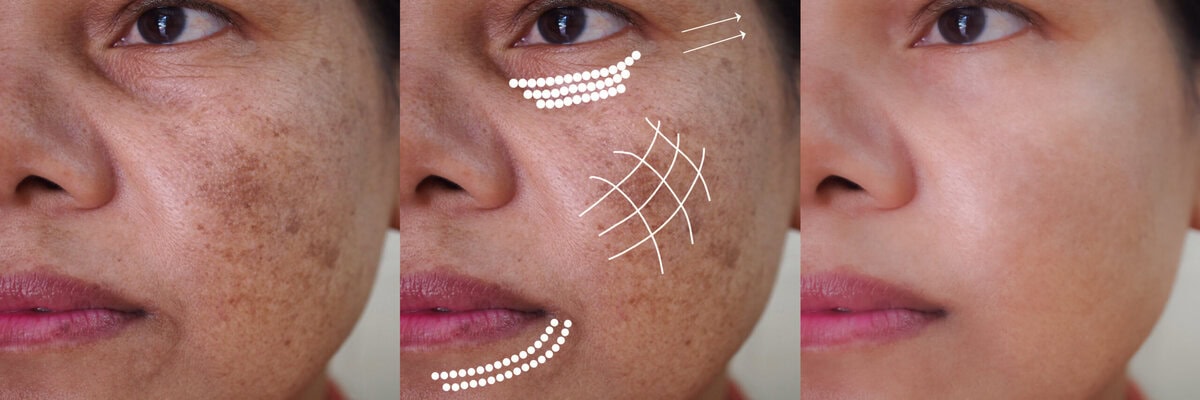
Brown spots, facial redness, and uneven tone rarely appear overnight. They usually reflect years of sun exposure combined with normal aging, genetics, and daily habits. For patients in Dartmouth, MA, recognizing these patterns supports better prevention and safer, more realistic treatment decisions.
Why do sunspots become darker with age?
UV light stimulates melanin, the pigment that gives skin color. Repeated exposure can leave concentrated pigment called sun spots, age spots, or solar lentigines. Meanwhile, collagen and elastin decline, skin structure changes, and cell turnover slows, making discoloration easier to notice. Genetics affect freckling, burning, and redness. Tanning, smoking, inconsistent sunscreen use, harsh products, and outdoor work can exacerbate visible signs of sun damage.
Common signs of sun damage
- Flat brown patches.
- Darkening freckles.
- Uneven skin tone.
- Persistent facial redness.
- Broken capillaries.
What causes facial redness over time?
Sun damage can weaken supportive tissue and make small surface vessels more apparent, especially near the nose and cheeks. Aging skin may also become thinner. Wind, temperature changes, stress, exercise, alcohol, spicy foods, irritating skincare, and rosacea can contribute. Persistent or worsening redness needs professional evaluation.
What does a sunspot look like?
A sunspot is usually flat, oval, and tan to dark brown. Common locations include the face, shoulders, chest, arms, and hands. Freckles often appear earlier and may fade with less sun exposure; age spots generally persist.
| Feature | Sun spots | Freckles |
| Onset | After accumulated exposure | Often during childhood |
| Pattern | Larger or clustered patches | Small scattered dots |
| Change | Usually remain visible | May fade without sun |
| Sites | Face, hands, chest, shoulders | Face, arms, exposed skin |
Seek medical evaluation for a new or changing mark, especially if it grows, bleeds, turns black, develops mixed colors, or has an irregular border.
Can IPL improve sun damage?
Lumecca IPL for sun damage uses light absorbed by melanin in brown areas and hemoglobin in visible vessels. Treated pigment can darken temporarily, then gradually shed; selected redness may fade as the body clears targeted vessels. Lumecca IPL skin brightening may improve visible discoloration and clarity but cannot erase every sign of photodamage or stop future spots.
Who is a good candidate for Lumecca IPL?
Possible candidates have suitable benign pigmentation, freckles, redness, or superficial vessels. A provider considers skin tone, recent tanning, pigment depth, medications, health history, sensitivity, and the diagnosis of redness. Suspicious lesions require medical assessment before cosmetic treatment.
Questions to ask during an IPL consultation
- Is Lumecca appropriate for this concern?
- What risks apply to my skin?
- How should I prepare and recover?
- What improvement and schedule are realistic?
What should treatment and recovery feel like?
Treatment may produce bright flashes, warmth, and a brief snapping feeling. Temporary redness is common. Brown spots may darken within 24 to 48 hours and flake during the following week; visible change can continue for one to two weeks. Results and session needs vary. South Coast Massachusetts patients can review this fall skin recovery guide while remembering UV protection remains essential year-round.
How can you prevent future sun damage?
Daily protection is important during Dartmouth summers, coastal recreation, cloudy days, and colder seasons.
Ways to protect skin from UV exposure
- Apply broad-spectrum SPF 30 or higher.
- Reapply during extended outdoor activity.
- Wear hats, sunglasses, and protective clothing.
- Seek shade and avoid tanning beds.
Gentle cleansing, moisturizer, and provider-recommended products support the skin barrier, but never replace sunscreen.
Benefits of professional skin evaluation
- Screens changing or suspicious lesions.
- Identifies redness triggers.
- Matches treatment to skin type.
- Builds a prevention plan.
Schedule a Lumecca IPL Consultation in Dartmouth, MA
Sun spots, redness, and uneven skin tone become more noticeable as cumulative exposure and skin structure change. Prevention remains essential. For appropriate candidates, Lumecca IPL may improve selected discoloration, but every plan should begin with professional evaluation and consistent sun protection.
Blurrd Lines welcomes patients from Dartmouth and South Coast Massachusetts for Lumecca IPL consultations. We can discuss pigmentation, redness, candidacy, aftercare, and realistic goals, with a focus on skin safety and long-term protection.
Contact us today for more information.
FAQs
What causes sunspots to appear with age?
Years of ultraviolet exposure can make pigment-producing cells release concentrated melanin, creating persistent brown areas. Normal changes in collagen, skin thickness, and turnover can make them more obvious. Genetics, sunburns, tanning, outdoor work, and inconsistent protection also influence their development.
What does a sunspot look like?
A sunspot typically appears as a flat tan or brown mark with a defined outline. It usually appears on exposed areas, including the face, chest, shoulders, arms, or hands. Changes in color, shape, size, border, or bleeding require a medical evaluation first.
Can IPL reduce redness from sun damage?
IPL may improve selected redness by directing light toward hemoglobin in superficial vessels. However, redness can also result from rosacea, irritation, medications, or other conditions. A qualified provider should identify the likely cause and determine whether Lumecca is a suitable option.
How many IPL treatments might I need?
Treatment number varies with skin type, pigment depth, vascular concerns, settings, sun exposure, and individual response. Some patients notice improvement after one session, while others need a series. Consultation provides a personalized plan; no responsible provider should promise an identical outcome for everyone.
How can I help prevent new sunspots?
Wear broad-spectrum SPF 30 or higher daily, reapply outdoors, and use hats, sunglasses, shade, and protective clothing. Avoid deliberate tanning and protect treated skin carefully. Regular self-checks and professional evaluations help identify new or changing lesions that need medical attention.